Select a Topic:

Application

The 2026 Barbara Martin Aphasia Research Grant application is now open!

About

The National Aphasia Association (NAA), along with the Academy of Aphasia (AOA), is pleased to offer two annual Barbara Martin Aphasia Research Grants. Each grant award amount is $10,000.

These special awards honor Barbara Martin’s leadership and strong commitment to supporting persons with aphasia in their pursuit to live meaningful and fulfilled lives. Barbara’s service as Board Chair of the NAA and her initiatives within the Burke Rehabilitation Hospital Communications Group were responsible for creating strong advocacy programs for this community. Barbara passed away on March 14th, 2021, leaving a legacy of service, compassion, and a shining example of how we can, all together, increase national awareness of aphasia.

What We’re Looking For

We welcome proposals that:

  • Address important questions in aphasia research
  • Have clear relevance to people living with aphasia
  • Can be completed within a one-year timeframe
  • Show strong potential for future research or clinical impact

Projects may focus on:

  • Aphasia treatment and rehabilitation
  • Assessment and measurement
  • Communication strategies and participation
  • Quality of life and lived experience
  • Early-stage or exploratory research

At least one funded project will have a clinical focus.

Who Should Apply

We encourage applications from:

  • Researchers and clinician-researchers
  • Speech-language pathologists
  • Early-career investigators

Applicants should not currently hold major external research funding (e.g., NIH R01 or equivalent), as this grant is intended to support emerging research programs .

International applicants are welcome.

Important Dates

Applications for the 2026 Barbara Martin Aphasia Research Grant are now available:

  • Applications / Proposal deadline:  July 1, 2026
  • Awards Announcement:  September 2026
  • Research Dates:  October 1, 2026-  September 30, 2027
  • Submission/Presentation at the Academy of Aphasia Annual Meeting:  Annual meeting October 2027 (If accepted, AOA meeting registration fees will be waived.)

Eligibility

Investigators must meet the following criteria to be eligible for the NAA/AOA Barbara Martin Research Grant.

  • The investigator must be a clinician who works with people with aphasia or a researcher whose work focuses on aphasia (A PhD is not required for the primary investigator).
  • The investigator must not yet have received external research funding for an NIHR01, R21, or equivalent grant from other funding entities and must not have received a K08 or K23 award; prior internal university funding is allowed. The training grant NIH F32 does not disqualify an investigator from this grant.
  • The proposal must be for research to be initiated, not currently in progress. The study should be completed in one year, and the scope should align with the funding amount.

Of note, international applicants may apply and will receive funds in US dollars.

Evaluation Criteria

A review panel will evaluate the proposals based on the following five criteria:

  • Significance: The potential for the study to advance aphasia rehabilitation and to impact clinical needs relevant to people with aphasia (PWA). Its significance as an early step in a research area of concentration must be clear and viable.
  • Approach: The merits of the design for accomplishing the specific aims of the study and, if applicable, the potential challenges of moving the study toward completion. The appropriateness and feasibility of a detailed account of the method, including measurement and data-analysis plans, will be considered relative to the award size.
  • Investigator: The perceived ability to carry out the study in one year, reflected by appropriate training, experience, and past accomplishments. The investigator outlines clear and detailed management and budget plans.
  • Environment: The extent to which the investigator has access to needed scientific facilities, resources, personnel, and participants.
  • Innovation: The refinement, improvement, or new application of theoretical concepts, methods, or interventions leading to high impact on aphasiology.

Reviewers will assign scores on a 1–9 scale for each criterion (1=exceptional, 9=poor), as well as an Overall Impact score based on all five criteria. The Overall Impact score tends to reflect reviewers’ assessment of whether the proposed study will be completed competently, be disseminated appropriately, will advance the investigator’s research program for future funding, and has the potential to positively impact people with aphasia.

The five criteria contribute differentially to the Overall Impact score to correspond to the goals and funding level of the grant competition. A tightly designed, feasible study is most appropriate for this competition.

For new investigators, for example, Approach would be more heavily weighted and Innovation would be less heavily weighted. The promise of the Investigator will be highly prioritized but will be evaluated in comparison to other new researchers in the discipline based on the investigator’s ability to clearly describe the activities and timeline necessary to complete the study in one year.

Proposal Guidelines

Proposal text should be single-spaced and placed in ONE PDF document containing all required sections in the order indicated. Please use the stated titles (below) as section headers. Selected font should be 11 point and uncondensed, and margins should be at least 1 inch. Pages should be numbered consecutively. The ONE PDF should be uploaded to the application page. It should include the following sections:

Investigator Letter (limit 1 page)

Provide a letter of application addressed to the “Grant Review Committee.” Explain briefly why you are pursuing the proposed study, the aims of the proposed research, how the study fits into your career development plan, and how the study aligns with the NAA’s mission. Include, as appropriate, information relative to your research interests and activities to date. Specifically indicate how your institution will support your research efforts. (Please note that this letter is not intended to be a replication of the investigator biographical sketch.)

Abstract (limit 1 page)

Concisely describe the study’s specific aims, methodology, and long-term objectives. Relate the study to future research and its potential impact on people with aphasia.

Research Plan (limit 3 pages)

  1. Significance of Research. ‍
    Outline the significance of the existing need and the importance of the proposed study in understanding, remediating, or compensating for the problem. Address the potential impact of the study’s activities on aphasiology.
  2. Approach-Design Methods, Procedures, and Evaluation
    Provide both a description and a justification for the study design, including participants, measurement techniques, instrumentation, data analysis, and evaluation procedures. Address ecological validity, if the type of research warrants this. Address potential challenges that could impact the completion of the study. This section should provide enough detail for reviewers to make informed judgments about the soundness of the proposed research procedures and its clinical relevance to aphasia.
  3. Innovation
    Describe new methods or how current methods are advanced with the introduction of new ideas relevant to the clinical treatment of aphasia.

References and/or Appendices (as appropriate, limit 2 pages)

Management Plan, Budget, Facilities, and Resources (limit 2 pages)

Provide an outline of study activities and timelines. Describe the facilities, resources, personnel, and participants available to you for carrying out the proposed study. Include the budget. The study start date will be October 1, 2026. Incorporate the mid-report deadline of April 30, 2027, and the final report deadline of September 30, 2027, into the management timeline. Justify budget items for direct expenses. Funding will not cover institutional overhead and indirect costs. Up to $1000.00 may be budgeted for travel expenses for the 2027 Academy of Aphasia meeting. Funding will be disbursed in U.S. currency to investigators.

Investigator Biographical Sketches (limit 5 pages per biosketch)

Provide NIH-style biographical sketches for key personnel. See the link below describing the biosketch. Adapt the biosketch as appropriate for the investigator profile. An ERA Commons address is not required for this application. To see an example of an NIH-style biographical sketch, go to “Non-fellowship Biosketch (blank format page, Word)” after opening the link below.
https://grants.nih.gov/grants/forms/biosketch.htm.

IRB Approval

If the study will use human participants, include proof of the Institutional Review Board’s (IRB) approval. If the IRB approval is not available at the time of proposal submission, you should explain the status of the IRB approval process and ensure that approval documents are documented if awarded the grant. IRB approval is required no later than September 1, 2026. It is essential to start the IRB approval process early. A lack of IRB approval documentation by September 2026 will automatically disqualify the proposal from funding consideration. The investigator assumes full responsibility for meeting these requirements.

Protection of Human Subjects (if IRB Approval is not available at the time of submission)
If the IRB approval is not available, the investigator should provide the following information in this proposal (limit 2 pages):

  1. Describe the characteristics of the participant population, including the anticipated number, age range, gender, ethnic background, and health status.
  2. Identify sources of research materials in the form of specimens, records, and/or data.
  3. Describe plans for the recruitment of participants and the consent procedures to be followed.
  4. Describe the potential risks to participants (e.g., physical, psychological, social, legal, or other).
  5. Describe the procedures for protecting against or minimizing potential risks to participants, including risks to confidentiality.
  6. Discuss why risks to participants are reasonable in relation to the anticipated benefits and to the importance of possible resulting knowledge.

Statement of Institutional Commitment (limit 1 page)

Submit a statement addressed to the “Grant Review Committee” from your current supervisor in your employment setting, indicating that the proposed study is endorsed and will not present a conflict of interest with your current responsibilities and commitments.

‍Required Mid and Final Reports

Grant recipients are required to submit a mid-year report and a final report of activities and outcomes to the National Aphasia Association. The report requirements will include a one-page summary of the (a) stated aims, (b) progress made/major accomplishments, (c) dissemination plans, and/or (d) challenges to completion. The National Aphasia Association and the Academy of Aphasia strongly encourage recipients to submit their results to appropriate journals. All presentations or publications from work funded by this award must include appropriate acknowledgement of NAA/AOA funding via the Barbara Martin Aphasia Research Grant. The winners will submit to be eligible to present at an upcoming Academy of Aphasia annual meeting.

If you have any questions, please contact research@aphasia.org

Grant Recipients

2025

David Ifeoluwa Ajayi, Ph.D. Student, University of South Florida

Project: Neural Correlates of Recursive Self-Feedback

“I am excited about this grant because it will support the equipment and resources needed to complete my study and help validate a powerful communication strategy for people with aphasia.”

Dr. Victoria Tilton-Bolowsky, Ph.D. CCC-SLP, Teachers College, Columbia
Project: Semantic Feature Analysis + Metacognitive Strategy Training: A Phase-II Study

“Receiving this grant is the ultimate honor—the National Aphasia Association does such important work supporting and connecting people with aphasia.”

2024

sophie Arheix-ParrasSophie Arheix-Parras SLP, Post-Doctoral Fellow  at the University of South Carolina
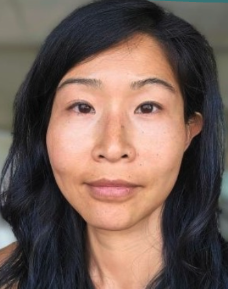
Project Title: Anterior Temporal Lobe stimulation using Transcranial Magnetic Stimulation to modulate lexicosemantic processes

“Receiving the Barbara Martin Aphasia Research grant is an honor, and I am excited to begin this project. This support enables us to implement non-invasive brain stimulation in a way that could be accessible to clinicians and ultimately enhance recovery outcomes for people with post-stroke aphasia.”

Dr. Sandy Lwi, VA Northern California Healthcare System

Project Title: MERIT: Mindfulness-Based Stress Reduction to Improve Neuropsychological Functioning in Acquired Brain Injury

“We thus hope this study will be the first of many to adapt loneliness and mental health interventions for PWA, which in turn can have critical downstream preventative health effects. Long-term, the pilot data collected through this study will inform a larger grant focused on conducting a randomized controlled trial of MBSR adapted for PWA.”

2023

alex swiderskiAlexander Swiderski Ph.D. Student at the University of Pittsburgh and The Center for Neural Basis of Cognition, Carnegie Mellon University
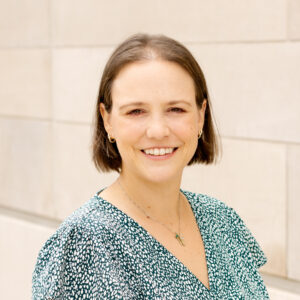
Project Title: The neurocognitive mechanisms underlying semantic feature generation in persons with aphasia.

Swiderski says, “Semantic Feature Analysis (SFA) is a widely-used word production treatment for people with aphasia that requires participants to generate semantic features associated with target words.” His study models how the brain interprets this treatment to make it more useful as an aphasia treatment.

brielle starkBrielle Stark Ph.D. at Indiana University Bloomington and
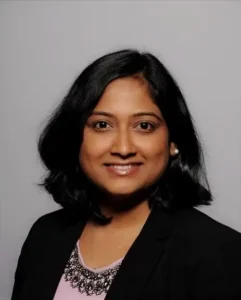
Sarah Grace Dalton Ph.D., CCC-SLP at Marquette University

Project Title: Identifying the needs and desires of individuals with aphasia related to current discourse assessment practices.

Stark says, “This project is near and dear to the PIs’ hearts. We have focused our careers on improving the way we (researchers and speech-language pathologists) assess and analyze language for individuals with aphasia. We want to shift the focus of assessment to discourse, which is the kind of everyday communication we engage in as a society: telling stories, having a conversation, ordering a meal.”

People with aphasia will partner with the two researchers to identify strengths and weaknesses in currently available materials to improve them for future people with aphasia.

2022

Bijoyaa Mohapatra Ph.D., CCC-SLP at Louisiana State University
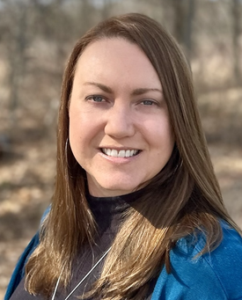
Dr.Bijoyaa Mohapatra has a vision for a telerehabilitation program for racially and ethnically diverse, minority, low-income African-American persons with aphasia. This will lead to increased quality of life and lead to new programs for low-income people with aphasia.

ellyn rileyEllyn A. Riley Ph.D., CCC-SLP at Syracuse University

Dr. Ellyn A. Riley studies fatigue and sleepiness in aphasia. This is a common challenge for many individuals as they recover from stroke, which impacts quality of life and communication. Although we know fatigue is common in persons with stroke and aphasia, we do not yet know the best ways to help. This study will tackle that problem.

woman caregiver giving a side hug to an elderly woman, , National Aphasia Association