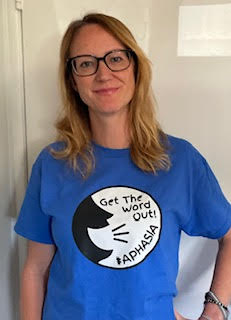
Aphasia changes how people communicate, but it doesn’t silence their voices. Advocacy gives those voices power. Whether you’re a person with aphasia, a family member, a clinician, or a community ally, you can be an advocate.
Advocacy helps raise awareness, improve services, influence policy, and shape research. It is essential to improving life for people with aphasia today—and for generations to come.
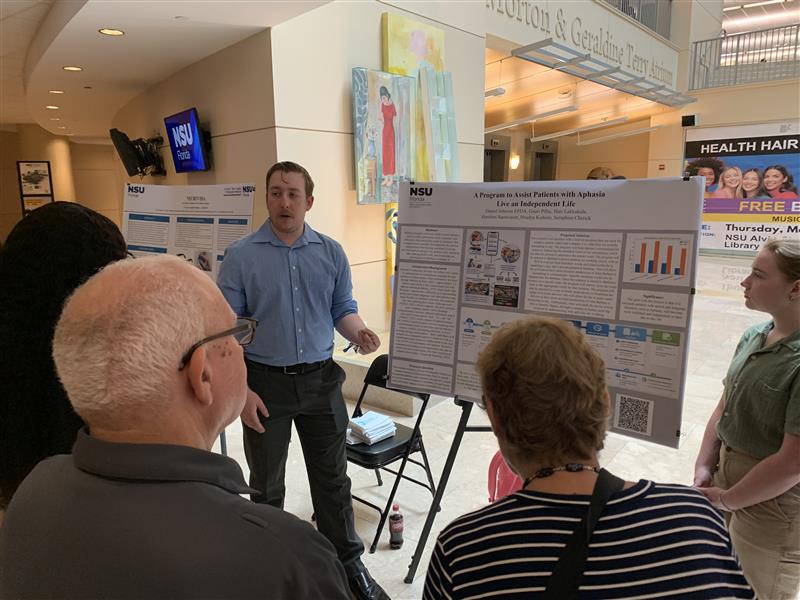
Advocacy isn’t only about research or big systems—it also happens in everyday moments. When you explain aphasia to a friend, ask your doctor to use simpler language, or tell your story to a local news outlet, you’re changing minds and breaking down barriers.
Advocacy means taking action to create change. There is no “right” way to advocate. Every effort counts. Here are some ideas for how to be an aphasia advocate:
Anyone. Everyone. You. You don’t need a title or special training. If you care, you can advocate.
If you are interested in advancing your advocacy work, consider joining our NAA Ambassador Program.
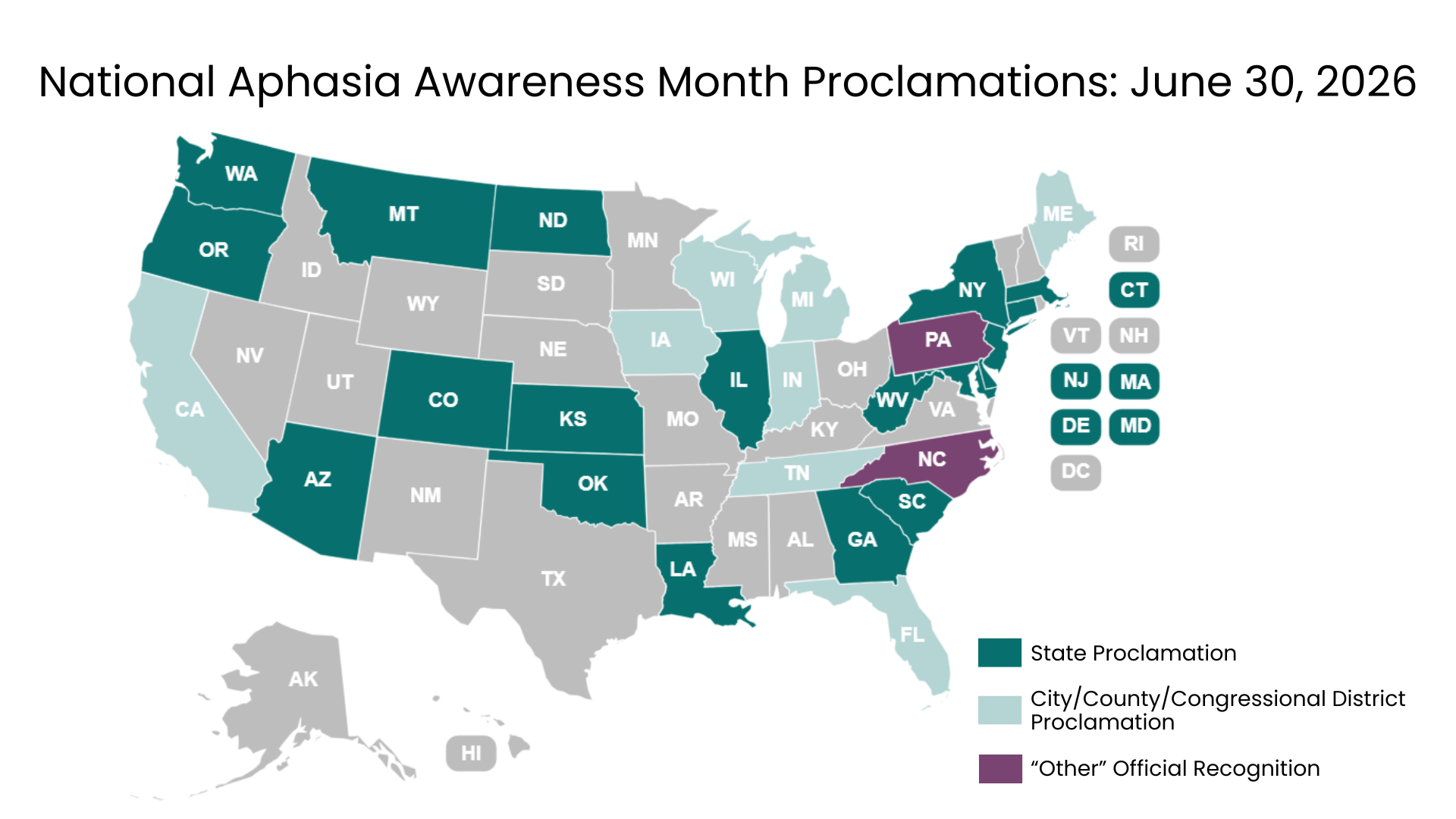
Every June we ramp up our aphasia awareness and advocacy efforts in honor of Aphasia Awareness Month.
In 2026, we were “United for Aphasia Awareness”. Our community came together to obtain official Aphasia Awareness Month Proclamations across the country.
Click the link below to learn more about Aphasia Awareness Month at the NAA.
Aphasia research is stronger when it includes the voices of the people it’s meant to help. Advocates are changing the way research works by:
People with aphasia and their families are no longer just study participants—they are partners in discovery.
At the National Aphasia Association, we support this shift by funding research that centers lived experience, such as through our Barbara Martin Aphasia Research Grants and Outdrive Aphasia PPA Research Grants.
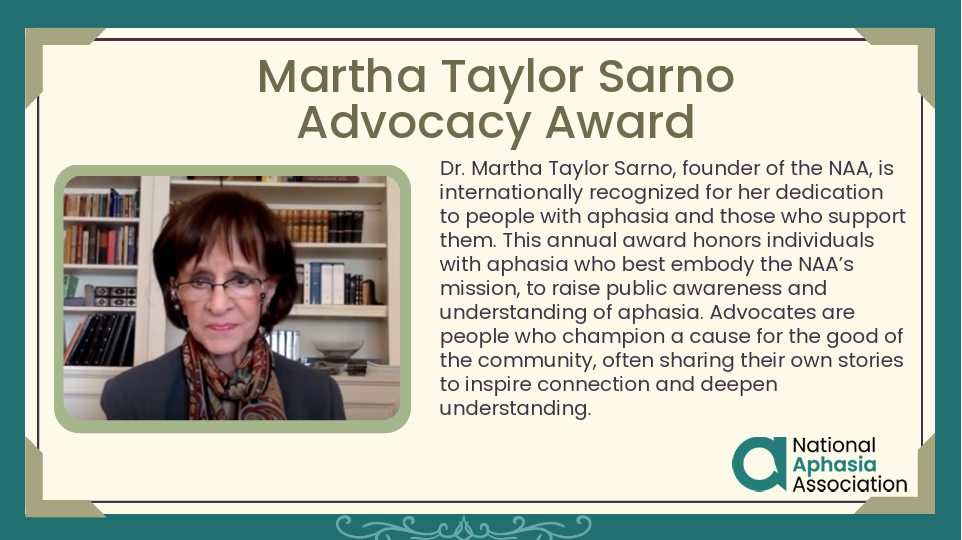
The Martha Taylor Sarno Advocacy Award is the highest honor bestowed upon an individual by the NAA.
This annual award recognizes an individual with aphasia who best represents the NAA’s mission of promoting public awareness and understanding of aphasia.
Individuals are nominated by their community, and the winner is selected by an NAA committee. The Awardee is announced at the Speaking Out Conference.
Follow the link below to learn more about the award and past awardees.