Proposal Guidelines
Proposal text should be single-spaced and placed in ONE PDF document containing all required sections in the order indicated. Please use the stated titles (below) as section headers. Selected font should be 11 point and uncondensed, and margins should be at least 1 inch. Pages should be numbered consecutively. The ONE PDF should be uploaded to the application page. It should include the following sections:
Investigator Letter (limit 1 page)
Provide a letter of application addressed to the “Grant Review Committee.” Explain briefly why you are pursuing the proposed study, the aims of the proposed research, how the study fits into your career development plan, and how the study aligns with the NAA’s mission. Include, as appropriate, information relative to your research interests and activities to date. Specifically indicate how your institution will support your research efforts. (Please note that this letter is not intended to be a replication of the investigator biographical sketch.)
Abstract (limit 1 page)
Concisely describe the study’s specific aims, methodology, and long-term objectives. Relate the study to future research and its potential impact on people with aphasia.
Research Plan (limit 3 pages)
- Significance of Research.
Outline the significance of the existing need and the importance of the proposed study in understanding, remediating, or compensating for the problem. Address the potential impact of the study’s activities on aphasiology.
- Approach-Design Methods, Procedures, and Evaluation
Provide both a description and a justification for the study design, including participants, measurement techniques, instrumentation, data analysis, and evaluation procedures. Address ecological validity, if the type of research warrants this. Address potential challenges that could impact the completion of the study. This section should provide enough detail for reviewers to make informed judgments about the soundness of the proposed research procedures and its clinical relevance to aphasia.
- Innovation
Describe new methods or how current methods are advanced with the introduction of new ideas relevant to the clinical treatment of aphasia.
References and/or Appendices (as appropriate, limit 2 pages)
Management Plan, Budget, Facilities, and Resources (limit 2 pages)
Provide an outline of study activities and timelines. Describe the facilities, resources, personnel, and participants available to you for carrying out the proposed study. Include the budget. The study start date will be October 1, 2026. Incorporate the mid-report deadline of April 30, 2027, and the final report deadline of September 30, 2027, into the management timeline. Justify budget items for direct expenses. Funding will not cover institutional overhead and indirect costs. Up to $1000.00 may be budgeted for travel expenses for the 2027 Academy of Aphasia meeting. Funding will be disbursed in U.S. currency to investigators.
Investigator Biographical Sketches (limit 5 pages per biosketch)
Provide NIH-style biographical sketches for key personnel. See the link below describing the biosketch. Adapt the biosketch as appropriate for the investigator profile. An ERA Commons address is not required for this application. To see an example of an NIH-style biographical sketch, go to “Non-fellowship Biosketch (blank format page, Word)” after opening the link below.
https://grants.nih.gov/grants/forms/biosketch.htm.
IRB Approval
If the study will use human participants, include proof of the Institutional Review Board’s (IRB) approval. If the IRB approval is not available at the time of proposal submission, you should explain the status of the IRB approval process and ensure that approval documents are documented if awarded the grant. IRB approval is required no later than September 1, 2026. It is essential to start the IRB approval process early. A lack of IRB approval documentation by September 2026 will automatically disqualify the proposal from funding consideration. The investigator assumes full responsibility for meeting these requirements.
Protection of Human Subjects (if IRB Approval is not available at the time of submission)
If the IRB approval is not available, the investigator should provide the following information in this proposal (limit 2 pages):
- Describe the characteristics of the participant population, including the anticipated number, age range, gender, ethnic background, and health status.
- Identify sources of research materials in the form of specimens, records, and/or data.
- Describe plans for the recruitment of participants and the consent procedures to be followed.
- Describe the potential risks to participants (e.g., physical, psychological, social, legal, or other).
- Describe the procedures for protecting against or minimizing potential risks to participants, including risks to confidentiality.
- Discuss why risks to participants are reasonable in relation to the anticipated benefits and to the importance of possible resulting knowledge.
Statement of Institutional Commitment (limit 1 page)
Submit a statement addressed to the “Grant Review Committee” from your current supervisor in your employment setting, indicating that the proposed study is endorsed and will not present a conflict of interest with your current responsibilities and commitments.
Required Mid and Final Reports
Grant recipients are required to submit a mid-year report and a final report of activities and outcomes to the National Aphasia Association. The report requirements will include a one-page summary of the (a) stated aims, (b) progress made/major accomplishments, (c) dissemination plans, and/or (d) challenges to completion. The National Aphasia Association and the Academy of Aphasia strongly encourage recipients to submit their results to appropriate journals. All presentations or publications from work funded by this award must include appropriate acknowledgement of NAA/AOA funding via the Barbara Martin Aphasia Research Grant. The winners will submit to be eligible to present at an upcoming Academy of Aphasia annual meeting.
If you have any questions, please contact research@aphasia.org

 The
The 
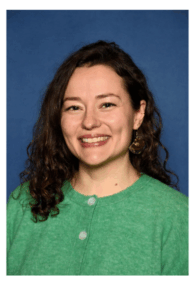 Dr. Victoria Tilton-Bolowsky, Ph.D. CCC-SLP, Teachers College, Columbia
 Sophie Arheix-Parras SLP, Post-Doctoral Fellow at the University of South Carolina
 Dr. Sandy Lwi, VA Northern California Healthcare System
 Alexander Swiderski Ph.D. Student at the University of Pittsburgh and The Center for Neural Basis of Cognition, Carnegie Mellon University
 Brielle Stark Ph.D. at Indiana University Bloomington and
 Bijoyaa Mohapatra Ph.D., CCC-SLP at Louisiana State University
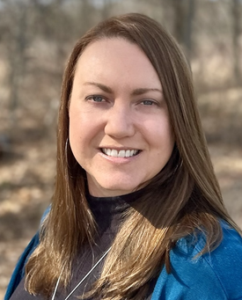 Ellyn A. Riley Ph.D., CCC-SLP at Syracuse University