The 2026 Outdrive Aphasia PPA Research Grant application is now open!
The Outdrive Aphasia Primary Progressive Aphasia (PPA) Research Grant supports research focused on Primary Progressive Aphasia (PPA)—a progressive neurological condition that affects communication, language, and identity. The grant award amount is $10,000.
This grant is made possible through a partnership with Outdrive Aphasia, an initiative dedicated to raising awareness and advancing action around PPA. The Outdrive Aphasia Golf Tournament is hosted by Campbell Gibbons & Associates. This incredible company and their many dedicated sponsors have committed to this annual day of golf and camaraderie for an important cause: PPA awareness, programming, and research. In their inaugural year (2024), the tournament raised over $50,000 for aphasia awareness and support programs.
The goal of this award is to support research that improves:
Projects should reflect a commitment to meaningful, real-world outcomes for people living with PPA.
We welcome proposals that:
Projects may include:
We encourage applications from:
This grant is especially well-suited for early-stage or exploratory research projects.
The application for the 2026 Outdrive Aphasia PPA Research Grant is now open!
Investigators must meet the following criteria to be eligible for the Outdrive Aphasia PPA Research Grant.
Of note, international applicants may apply and will receive funds in US dollars.
A review panel will evaluate the proposals based on the following five criteria:
Reviewers will assign scores on a 1–9 scale for each criterion (1=exceptional, 9=poor), as well as an Overall Impact score based on all five criteria. The Overall Impact score tends to reflect reviewers’ assessment of whether the proposed study will be completed competently, be disseminated appropriately, will advance the investigator’s research program for future funding, and has the potential to positively impact people with aphasia.
The five criteria contribute differentially to the Overall Impact score to correspond to the goals and funding level of the grant competition. A tightly designed, feasible study is most appropriate for this competition.
For new investigators, for example, Approach would be more heavily weighted and Innovation would be less heavily weighted. The promise of the Investigator will be highly prioritized but will be evaluated in comparison to other new researchers in the discipline based on the investigator’s ability to clearly describe the activities and timeline necessary to complete the study in one year.
Proposal text should be single-spaced and placed in ONE PDF document containing all required sections in the order indicated. Please use the stated titles (below) as section headers. Selected font should be 11 point and uncondensed, and margins should be at least 1 inch. Pages should be numbered consecutively. The ONE PDF should be uploaded to the application page. It should include the following sections:
Provide a letter of application addressed to the “Grant Review Committee.” Explain briefly why you are pursuing the proposed study, the aims of the proposed research, how the study fits into your career development plan, and how the study aligns with the NAA’s mission. Include, as appropriate, information relative to your research interests and activities to date. Specifically indicate how your institution will support your research efforts. (Please note that this letter is not intended to be a replication of the investigator biographical sketch.)
Concisely describe the study’s specific aims, methodology, and long-term objectives. Relate the study to future research and its potential impact on people with PPA.
Provide an outline of study activities and timelines. Describe the facilities, resources, personnel, and participants available to you for carrying out the proposed study. Include the budget. The study start date will be October 1, 2026. Incorporate the mid-report deadline of April 30, 2027 and the final report deadline of September 30, 2027, into the management timeline. Justify budget items for direct expenses. Funding will not cover institutional overhead and indirect costs. Funding will be disbursed in U.S. currency to investigators.
Provide NIH-style biographical sketches for key personnel. See the link below describing the biosketch. Adapt the biosketch as appropriate for the investigator profile. An ERA Commons address is not required for this application. To see an example of an NIH-style biographical sketch, go to “Non-fellowship Biosketch (blank format page, Word)” after opening the link below.
https://grants.nih.gov/grants/forms/biosketch.htm.
If the study will use human participants, include proof of the Institutional Review Board’s (IRB) approval. If the IRB approval is not available at the time of proposal submission, you should explain the status of the IRB approval process and ensure that approval documents are documented if awarded the grant. IRB approval is required no later than September 1, 2026. It is essential to start the IRB approval process early. A lack of IRB approval documentation by September 2026 will automatically disqualify the proposal from funding consideration. The investigator assumes full responsibility for meeting these requirements.
Protection of Human Subjects (if IRB Approval is not available at the time of submission)
If the IRB approval is not available, the investigator should provide the following information in this proposal (limit 2 pages):
Submit a statement addressed to the “Grant Review Committee” from your current supervisor in your employment setting, indicating that the proposed study is endorsed and will not present a conflict of interest with your current responsibilities and commitments.
Grant recipients are required to submit a mid-year report and a final report of activities and outcomes to the National Aphasia Association. The report requirements will include a one-page summary of the (a) stated aims, (b) progress made/major accomplishments, (c) dissemination plans, and/or (d) challenges to completion. The National Aphasia Association strongly encourages recipients to submit their results to appropriate journals. All presentations or publications from work funded by this award must include appropriate acknowledgement of funding via the Outdrive PPA Aphasia Research Grant.
If you have any questions, please contact research@aphasia.org
Dr. Jeanne Gallée, University of Washington School of MedicineProject: Setting The Standard: Normative Parameters for The Progressive Aphasia Communication Toolkit (PACT)
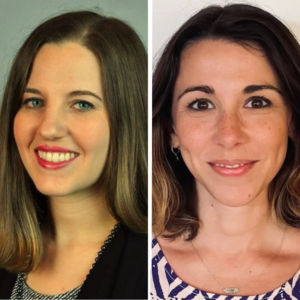
“Receiving the Outdrive PPA Grant award is both an honor and a responsibility. Together, we can break down barriers to care and reimagine what communication, autonomy, and personhood look like for people living with PPA.”
Mara Steinberg Lowe, Ph.D., CCC-SLP CUNY Queens CollegeProject: Combined Personalized Word Naming and Spaced Retrieval Training for Primary Progressive Aphasia: A Preliminary Investigation

“This project examines whether combining an intensive language treatment with a computer-based home training program will maximize retention of personally-relevant words for individuals living with Primary Progressive Aphasia (PPA). We are hopeful that this will lead to increased accessibility and effectiveness of anomia interventions for people with progressive aphasias.”