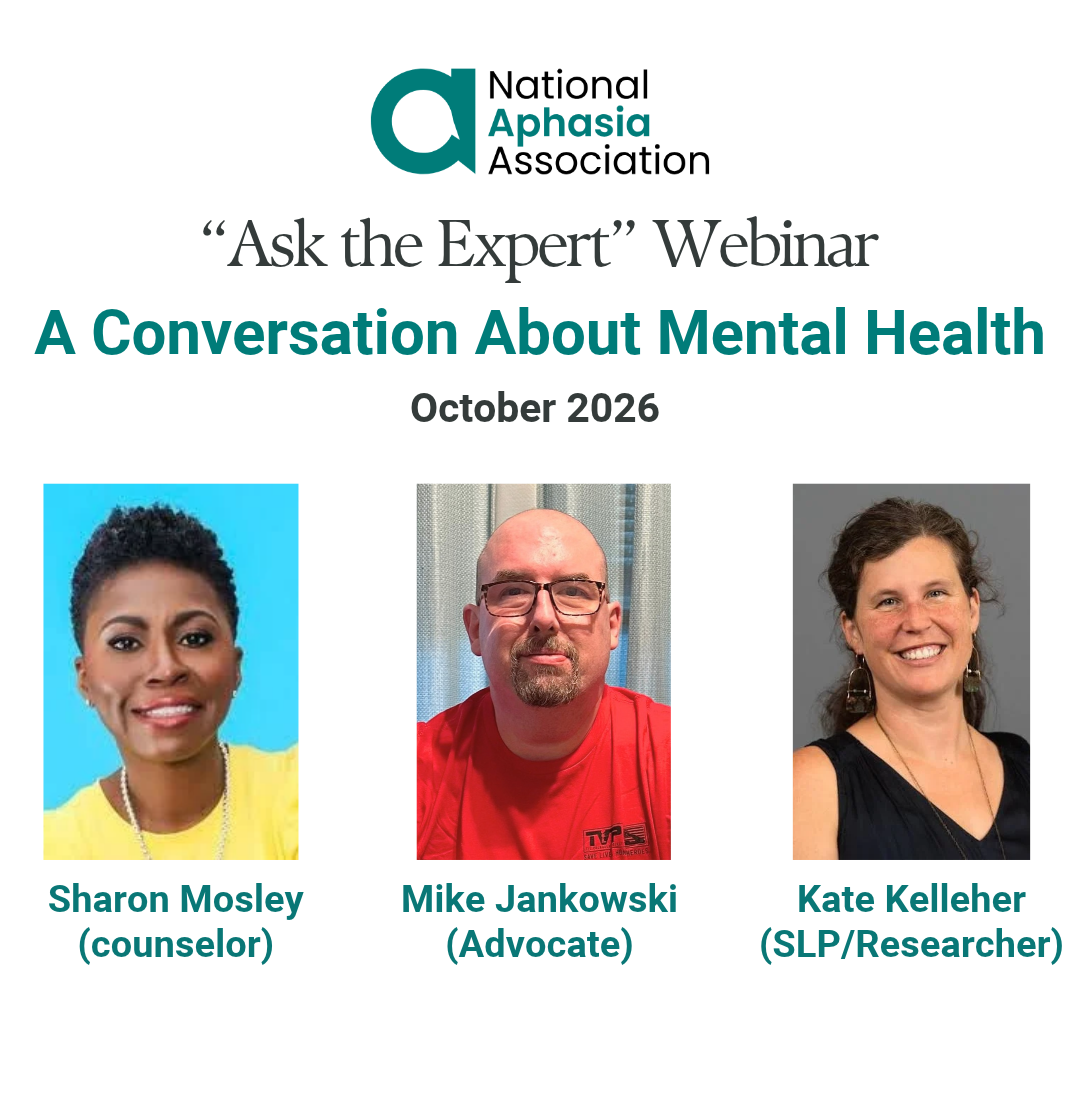
A Conversation About Mental Health
Date: October 14, 2026
Topic: A Conversation About Mental Health
Experts:
- Kate Kelleher, MA, CCC-SLP — Speech-language pathologist and researcher at Western Carolina University studying mental health and aphasia
- Mike Jankowski — Person with aphasia and NAA Ambassador
- Sharon Mosley — Mental health and wellness professional (owner of The Fit Talk) and co-leader of NAA’s Aphasia and Wellness program.
Description: Living with aphasia can affect more than communication. It can affect how we feel, our relationships, our confidence, and our connections with others. Finding mental health support can also be difficult, especially when counselors and other professionals do not understand aphasia. Together, we explore:
- What research and lived experiences tell us about emotional health and aphasia.
- Why finding mental health support can be difficult.
- What programs, professionals, and researchers are already doing to help.
- How we can improve access to care, educate professionals, and strengthen community connections.
Kate shared research on the psychosocial needs of people with aphasia and the barriers to care, including caseload pressures for speech therapists and a lack of mental health training. She highlighted the role of speech therapists as communication brokers and discussed enabling factors like peer support, specialist training, and nervous system-focused tools.
Mike shared his personal experience with stroke and aphasia, emphasizing the profound impact on his identity and the need for accessible, simple resources for both people with aphasia and their care partners.
Sharon, a licensed clinical mental health therapist, discussed the importance of a team approach involving care partners and providers, the use of diverse communication tools in therapy, and the value of group support.
The panel also addressed common challenges such as frustration, the loss of career and identity, and the need for supportive care partners.
Maura provided an update on the NAA’s efforts to improve access to mental health providers and resources, including a special work group on mental health and aphasia.
Resources:
- Kate’s slides (with linked references)
- Aphasia Canada – Education & Training / Training Programs & Workshops
- Psychology Today
- “Surf the Wave” 90-second rule article
- Stroke Onward
- NAA Provider Directory
- NAA Ambassador Program
- Hand Model of the Brain – Dr. Dan Siegel YouTube video
- Call or text “988” for the Suicide and Crisis Lifeline – available 24/7, free, confidential
- Resources from “After the Expert” interactive virtual program 10/21/26