
The 2026 midterm elections are coming! Election Day is Tuesday, November 3, 2026.
Early voting has already started in some states. In other states, it will begin soon.
For people with aphasia, voting may take extra time or support. But having aphasia does not mean losing your right to vote. We want to share some ways to make voting easier.
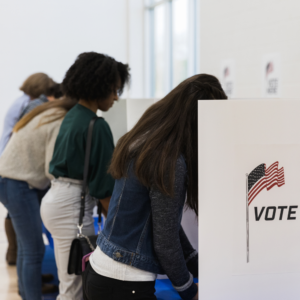
How might aphasia impact voting?
Aphasia can make it difficult to:
- Read the ballot.
- Understand written directions.
- Speak with election workers.
- Write or complete forms.
- Find information about candidates and issues.
These challenges do not mean a person cannot make decisions. People with aphasia can have their own opinions and can make choices. And voters with disabilities have important rights and protections.
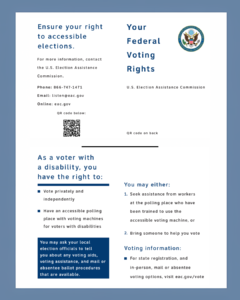
You have the right to ask for help
Federal laws protect voting access for people with disabilities.
If you have aphasia, you can:
- Ask for help reading or understanding voting materials.
- Bring someone you trust to help you vote, with limited exceptions under federal law.
- Request accessible voting equipment.
- Ask election workers about available accommodations.
- Take the time you need to communicate your choices.
Your vote is YOUR choice. Of course, someone helping you should support your selection process— not make decisions for you.
5 Tips to Make Voting Easier
- Make a plan. Find out where and when you can vote. Check whether early voting or voting by mail is available in your state. https://www.eac.gov/voters/register-and-vote-in-your-state
- Learn about the ballot before you vote. Look at a sample ballot, if available. Take time to learn about the candidates and issues. https://justfacts.votesmart.org/ is a nonprofit that helps you find out about candidates in your area.
- Choose someone you trust to be a communicative-support person. You may want someone to help you read, understand instructions, or communicate at the polling place.
- Ask for communication supports. You can ask election workers to speak slowly, write down important words, or give you extra time. Be sure to bring along your aphasia ID card. https://aphasia.org/aphasia-id-card-and-other-identification/
- Know your rights. If you have trouble voting, ask for assistance. You can also contact a voter protection organization. https://civilrights.justice.gov/voting-resources
Rewatch our “Ask the Expert” webinar – Voting Rights and Pro Tips
In October 2024, the National Aphasia Association hosted an Ask the Expert about Voting Rights & Pro Tips for People with Aphasia. Our panel included: Troy Van Horn, an artist, writer, and advocate living with aphasia; Marion Leaman, PhD, CCC-SLP, aphasia researcher and director of the ALL-CAN-Converse Aphasia Lab at the University of Kansas Medical Center; and Sara Kempner, representing U.S. Vote Foundation.
Voting with Aphasia: Preparation Makes a Difference
In a 2016 article for The ASHA Leader, Jacqueline Hinckley, PhD, CCC-SLP, NAA Board Chair, and Alejandro Brice, PhD, CCC-SLP, highlighted an important message: People who have difficulty reading because of aphasia can still participate in elections. With the right preparation, support, and technology, voting can be more accessible. Read their article: Are Your Clients Ready to Vote? (The ASHA Leader, September 2016).
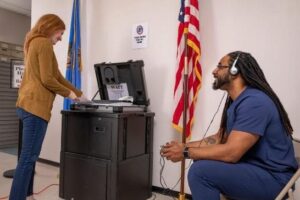 More Helpful Voting Resources:
- Voices of Hope for Aphasia-Having Trouble Reading? You Can Still Vote!
- U.S. Vote Foundation-Disability Voting Resources
- U.S. Election Assistance Commission-Voter Information and Voting Rights
- Vote.gov Find Voting Information for Your State
- Election Protection Hotline-Call 866-OUR-VOTE (866-687-8683) for help with voting questions or problems.
Communication access is a right. That includes the opportunity to participate in elections. Whether you vote early, by mail, or on Election Day, knowing your rights and planning ahead can make the process easier.