
 Travel can be exciting. But it can feel different or even overwhelming with aphasia, especially when thinking about planning for your first trip.
The good news is that many people with aphasia continue to travel. Whether you want to visit family, take a vacation, or explore a new place, planning ahead and being prepared can help make your trip more enjoyable.
During a recent National Aphasia Association Ask the Expert webinar, people with aphasia and speech-language pathologists shared their favorite travel tips and resources.
You Can Still Travel
Having aphasia does not mean you have to stop doing the things you love.
Craig Smith has lived with aphasia for more than 20 years. He began traveling again just a few months after his stroke with support from his family. Today, he still travels, organizes camping trips for people with aphasia, and encourages others to keep exploring. He says, “If I can do it, so can you!”
Dr. Denise Mendez also continued traveling after her brain hemorrhages. Her advice is simple: find out what help is available, and use it.
Travel may look different than it did before, but with planning and support it can still be meaningful, fun, and rewarding.
Before You Travel – Planning Ahead
A little planning can make a big difference.
1. Call your hotel
If you are staying at a hotel, call before you arrive to confirm accessibility features.
Ask questions like:
- Is the room accessible?
- Can someone show you the room on a video call?
- Can furniture be moved if needed?
2. Learn about accessibility
If you are flying, check out the TSA’s resource for traveling with a disability or medical condition. You can also print and bring their TSA Disability Notification Card.
Many attractions, museums, and hotels have accessibility information on their websites. Use accessibility websites and apps (such as AccessNow) to evaluate hotels, museums, and attractions based on real visitor experiences.
3. Ask for airport assistance
 Many airports offer assistance for travelers with hidden disabilities. The Hidden Disability Sunflower program has a map of places that support people with aphasia and other disabilities.
You can request:
- help getting to your gate
- wheelchair assistance
- help through security or customs
- early boarding, depending on the airline
Even if you do not usually use a wheelchair, airport assistance can reduce stress and make navigating a busy airport much easier.
4. Download translation apps
If you are traveling to another country, download the language you need in Google Translate or a similar app before you leave.
This lets you:
- translate menus
- read signs
- communicate without internet access
If you use an aphasia communication card, consider translating it into the local language.
Tips While You Travel
1. Don’t do too much in one day
Travel can be tiring. Leave time to:
- rest
- eat
- drink water
- take breaks
You do not have to see everything in one day.
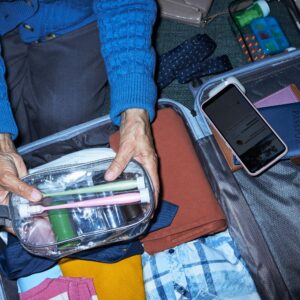
2. Pack for comfort
Bring:
- medications and a medication list
- water
- snacks
- sunscreen
- a small first-aid kit
- your hotel address written down
- emergency contact information
Having these items nearby can make you feel more prepared.
3. Accept help
Asking for help is okay.
Airport staff, hotel employees, tour guides, friends, and family often want to help. Accepting support can make your trip more enjoyable.
4. Travel your own way
There is no “right” way to travel.
Some people enjoy cruises.
Others prefer road trips or shorter vacations.
Choose what feels comfortable for you.
5. Be yourself
Many people have never met someone with aphasia.
By communicating in your own way, you may help others learn about aphasia while enjoying your trip.
In fact, some people with aphasia have commented that they prefer traveling to a non-English speaking country. There, all tourists face communication challenges!
Can’t Travel Right Now?
You can still explore the world from home.
Visit museums online
Many museums offer free virtual tours.
You can explore famous places, look at artwork, and learn about history without leaving your house.
Watch travel videos
Search YouTube for:
- “Best of Italy”
- “Introduction to Japan”
- “Paris drone tour”
These videos can help you experience new places and cultures.
Join a travel conversation group
Many aphasia groups explore destinations together using photos, videos, and stories. It is a fun way to learn, connect with others, and share your own experiences.
Our panelists Craig and Genevieve lead a virtual group through Aphasia Recovery Connection. Kristine leads a group with The Aphasia Project in North Carolina.
Every Journey Counts
Travel is about more than airplanes and passports.
It is about learning, connecting with others, trying new things, and enjoying life.
Whether you take a weekend road trip, visit family, explore a museum online, check out a local attraction, or dream about your next adventure, there are many ways to experience the world while living with aphasia.
With a little planning, and the right support, you too can travel with aphasia!